Forget the Algorithm: Why Millions Are Ditching Big Social for Tiny Digital Clubhouses

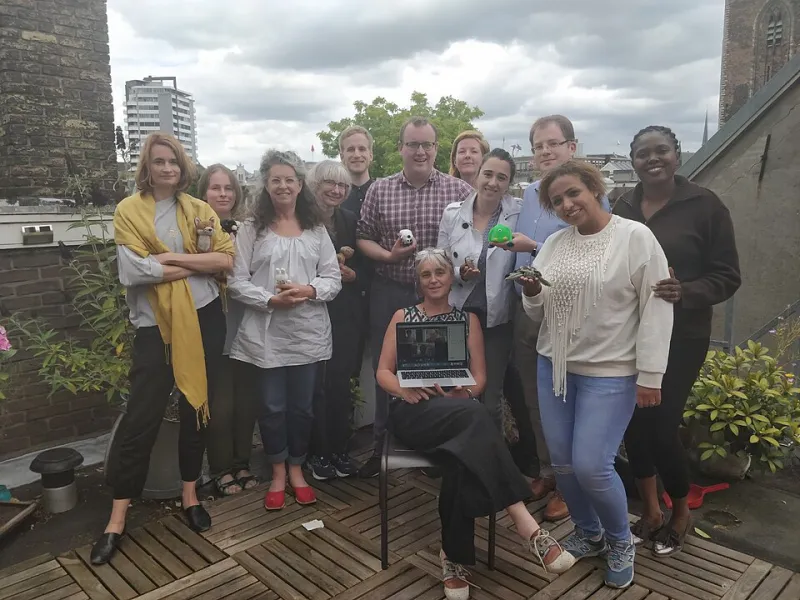
Photo: Tobias "ToMar" Maier, CC BY-SA 3.0, via Wikimedia Commons
There's a particular kind of exhaustion that comes from scrolling through a major social media platform these days. You open the app looking for something — connection, maybe, or just a laugh — and instead you get outrage bait, sponsored content, and a cousin you barely know sharing a meme from 2019. It's loud. It's crowded. And increasingly, it doesn't feel like yours.
So people are leaving. Not in dramatic, delete-your-account fashion necessarily, but in a slow, deliberate migration toward something smaller. Something more human.
Welcome to the age of the micro-community.
What We Mean by Micro-Community
A micro-community isn't just a small group chat. It's an intentionally curated digital space built around a shared identity, interest, or purpose — and crucially, one where members actually recognize each other's names. We're talking Discord servers dedicated to a single genre of video game music. Slack groups where independent bookstore owners swap advice. Private forums where amateur astronomers in the Midwest compare notes on last night's sky.
These aren't fringe experiments. Discord alone reported over 19 million active servers as of recent years, and that number keeps climbing. Reddit's most engaged communities are often the hyper-specific ones — think r/malelivingspace or r/vinylcollectors — not the massive default subs that feel like Times Square on New Year's Eve.
The scale is intentional. And that's kind of the whole point.
The Algorithm Problem Nobody Wants to Say Out Loud
Here's the uncomfortable truth about platforms like Facebook, TikTok, and Instagram: they were never really built for you. They were built for advertisers, and you are the product being optimized. The algorithm doesn't care whether you feel genuinely connected after 45 minutes of scrolling — it cares whether you stayed on the app for 45 minutes.
Micro-communities operate on a completely different logic. When Marcus Chen started a Discord server for people obsessed with analog synthesizers in 2021, he had no ad revenue to chase. "I just wanted a place where I could geek out without feeling like I had to perform for a feed," he told us. "Within six months we had 400 members and I knew probably 300 of them by their username, their setup, their vibe."
That intimacy is the product. And you can't manufacture it with a recommendation engine.
What Makes These Spaces Actually Work
Not every Discord server becomes a thriving community. Plenty of them are ghost towns — a few pinned messages, some tumbleweeds, maybe one guy posting every three months. So what separates the ones that stick?
Community builders who've figured it out tend to point to a few consistent factors:
Clear identity from day one. The best micro-communities don't try to be everything. They pick a lane and commit. A server for "music lovers" will die. A server for "people who collect Japanese city-pop vinyl from the 1980s" has a fighting chance.
Active moderation that actually cares. This isn't about policing speech — it's about maintaining the culture. Good mods are less like bouncers and more like hosts at a dinner party. They set the tone, welcome newcomers, and gently redirect conversations that drift from what makes the space special.
Rituals and recurring touchpoints. The communities that survive long-term tend to have built-in rhythms. Weekly show-and-tell threads. Monthly virtual meetups. An annual "best of" roundup. These aren't just engagement tactics — they're the equivalent of inside jokes. They make people feel like they belong to something ongoing.
Low barrier to meaningful contribution. On Twitter, your post competes with celebrities and media companies. In a tight-knit server, your question or observation actually gets seen and responded to by people who give a damn.
The Tradeoffs Nobody Talks About
Let's be honest: micro-communities aren't perfect. Discovery is genuinely hard. If you don't already know the right server exists, you might never find it. The insularity that makes these spaces feel safe can also make them feel cliquey to newcomers. And because they're often run by volunteers with day jobs, they're fragile — one burned-out moderator can unravel years of community building overnight.
There's also the platform dependency problem. Discord, Slack, and even Substack are still corporate platforms with their own interests. They can change pricing, alter features, or shut down entirely. The coziest digital living room in the world is still renting from a landlord.
Still, even with those caveats, something real is happening here. People are voting with their attention — and they're choosing depth over reach.
The Niche Nest Angle
At Niche Nest, we've always believed that the internet is at its best when it's specific. When it's a corner, not a plaza. The rise of micro-communities feels like the broader internet finally catching up to that idea.
The big platforms gave us scale. Micro-communities are giving us something harder to build and more valuable to keep: the sense that somewhere online, there are people who actually get it.
And honestly? That's worth a lot more than a thousand followers who never say a word.