Being Into Weird Stuff Is Actually Kind of Lonely — Until It Isn't

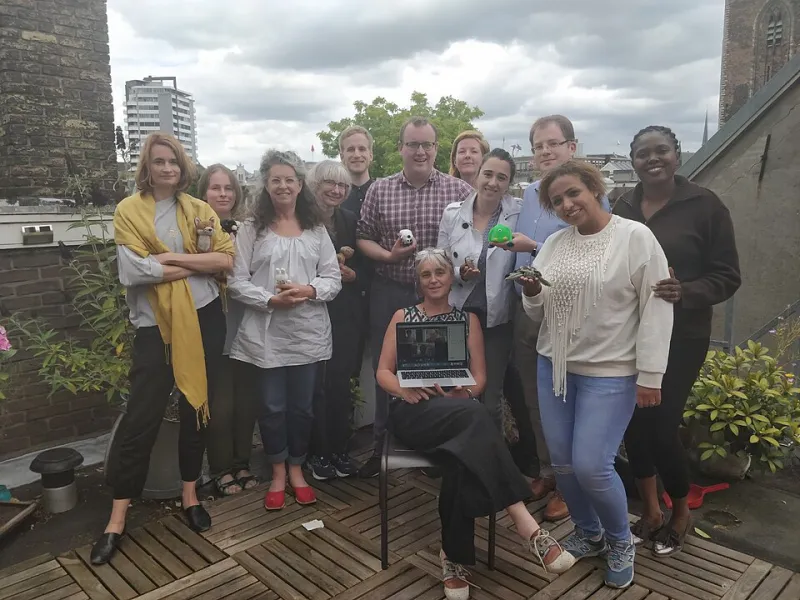
Photo: David Marcu davidmarcu, CC0, via Wikimedia Commons
I want to tell you about the time I spent forty-five minutes trying to explain to my coworkers why a particular 1970s Italian progressive rock album was genuinely life-changing, and watched their eyes glaze over in real time. Not rudely — they were trying. But there's a specific, low-grade loneliness that comes from being the only person in the room who cares deeply about something that, to everyone else, is just noise.
If you're reading this on Niche Nest, there's a decent chance you know exactly what I'm talking about.
The Paradox of Passionate Obscurity
Having a niche obsession is a strange thing to navigate in everyday American social life. We live in a culture that rewards broad appeal — the sports team everyone roots for, the Netflix show everyone's watched, the meme that everyone's already seen. Small talk is basically a shared media consumption quiz, and if your media consumption runs toward, say, antique mechanical typewriter repair or competitive moss gardening, you're going to fail that quiz a lot.
The paradox is this: the more deeply you care about something, the more isolated it can make you feel — at least in physical proximity. The person who casually likes movies can connect with almost anyone. The person who has strong opinions about the cinematography of mid-period Taiwanese New Wave cinema is going to have a harder time at a backyard barbecue.
And here's what makes it genuinely complicated: you don't want to care less. You just want to find people who care as much.
The Internet Was Built for This (Eventually)
The early promise of the internet — this idea that it would connect people across geography based on shared interest rather than shared zip code — was real. It just took a while to fully materialize, and it came with some complications along the way.
For a lot of us who grew up feeling like the weird kid in our particular town or suburb, the internet was genuinely transformative. The first time you posted something niche and specific and had a stranger on the other side of the country respond with "yes, exactly this" — that's a feeling that's hard to overstate. It's the digital equivalent of realizing you're not actually alone in a room; you were just talking too quietly.
Forum culture, in its prime, was remarkable for this. The old-school message boards — the ones that ran on phpBB software and had member counts in the hundreds rather than millions — were places where your obscure interest wasn't a liability. It was the price of admission. You didn't wander into a community for vintage fountain pen enthusiasts by accident. You found it because you needed it.
When Finding Your People Gets Complicated
But let's not romanticize this too much, because finding your people online comes with its own set of challenges that are worth being honest about.
Niche communities can calcify. The same people who made you feel seen when you first arrived can, over time, start to feel like gatekeepers. There's a particular flavor of niche toxicity that comes from communities where the barrier to belonging becomes increasingly high — where you have to prove your devotion to the thing before you're treated like a real member. That's not community. That's a cult with better taste.
There's also the identity trap. When your interest is niche enough, it can start to become your entire identity online, which creates its own weird pressure. You start performing the interest rather than just having it. Your posts become increasingly optimized for the community rather than genuinely expressive. You stop being a person who loves a thing and start being a brand built around loving a thing. That's a subtle but real distinction, and it sneaks up on you.
And then there's the loneliness that persists even after you've found your people online — the kind that comes from realizing that connection through a screen, while real and valuable, doesn't fully replace the experience of talking about the thing you love with someone sitting across from you at a diner at 11pm.
How to Actually Find Your People (Without Losing Yourself)
None of this is meant to be discouraging. Finding genuine community around niche interests is absolutely possible — I've done it, plenty of people I know have done it, and the infrastructure for it has never been better. But it's worth going in with some intentionality.
Search for the conversation, not just the community. Don't just look for groups dedicated to your interest — look for where the interesting conversations about it are happening. Reddit threads, YouTube comment sections on deep-cut videos, Discord servers, Substack comment threads. The people worth knowing are usually in the middle of saying something worth reading.
Contribute before you ask for anything. This sounds obvious, but it's genuinely the difference between finding a community and just lurking in one. Post your take. Share the thing you made. Ask the specific question that's been nagging at you. Presence creates connection.
Find the crossovers. Some of the richest niche communities aren't built around a single interest — they're built around a particular sensibility. People who are into experimental music often overlap with people interested in visual art, certain kinds of literature, specific design aesthetics. The Venn diagram of niche interests is weirder and more interconnected than it looks from the outside.
Don't abandon the physical world entirely. Local meetups, conventions, record fairs, maker spaces, independent bookstores with events — these are still where some of the best community happens. The internet helps you find your people; sometimes you have to actually show up somewhere to really meet them.
The Thing Nobody Tells You
Here's what I've figured out after years of being the person who cares too much about things nobody else has heard of: the loneliness doesn't fully go away, and that's actually okay.
There's something about having an interest that lives mostly in your own head — that you've cultivated largely alone, that you've gone deep on without a guide — that becomes part of who you are. The solitude of niche obsession isn't only a problem to be solved. It's also where the interesting parts of your personality get built.
The goal isn't to find so many people who share your interests that you never feel alone with them again. The goal is to find enough people — even just two or three, even scattered across different time zones — who make you feel like the thing you care about is worth caring about.
For most of us, the internet can do that. It just requires being a little patient, a little brave about posting the weird thing, and willing to keep looking past the first community that doesn't quite fit.
Your corner of the internet is out there. Sometimes you have to build it yourself.